Search our web site

Zreče crest Slovene flag

Pella, and the Folk Carols Festival - November 28th to December 5th 2007


Pella singing group

Pella singing group

I first heard Ljuden Dimkaroski on a visit to Slovenia a few years ago when he was giving a lecture on Balkan and Macedonian music with illustrations from his singing group Pella. I was spellbound for over an hour - despite not understanding a word of the language. As with the group, he exudes a kind of charisma which makes any performance a delight and, as a professional trumpeter of much reknown with the Slovene National Theatre, he extracts a performance of a very high standard from his singers.

The group sing arrangements of folk songs from Slovenia and Macedonia, many of which were dances. They have toured in other European countries though this is their first visit to England - as well as stunning harmonies, their passion for their homeland and its wild landscape is totally evident in their singing.

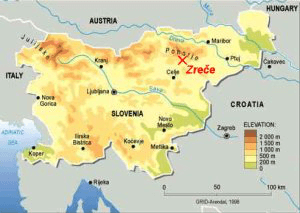
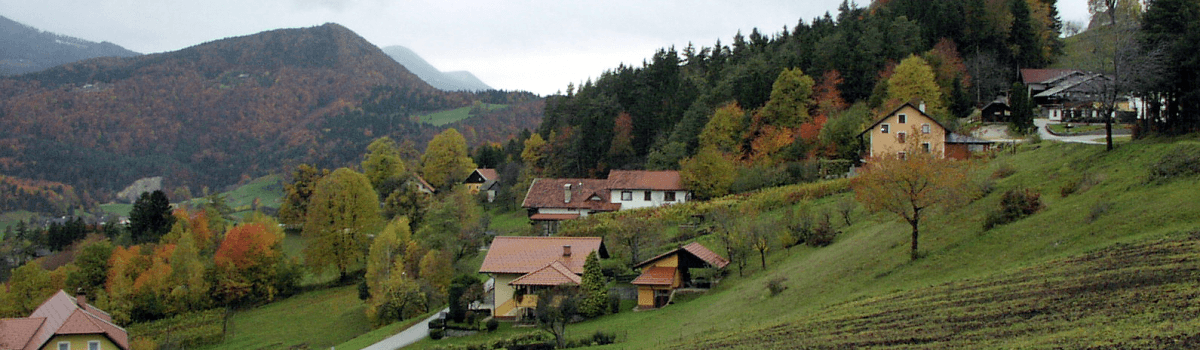
I had always put off inviting them because I knew that the singers I had met didn't speak any English, but when Barbara Pusnik, a university student of English living just a mile from the centre of Zreče, said she would like to come and join us for our Carols Festival but didn't want to come alone - it seemed like a perfect opportunity.

Collecting visitors from Stansted is not everyone's cup of tea. It's not just the five hour drive (if you're lucky to avoid traffic jams) it's the layout of the airport which is designed to fool even the most skilled navigator. So I told Barbara that on no account would I pick them up from Stansted but was quite happy to collect them all from Liverpool off the Venice flight - so she promptly bought her ticket and contacted the singers. Unfortunately when they asked if it was possible to fly from Ljubljana to London she replied (quite accurately) that it was possible - and they promptly bought their tickets to Stansted!

The Geordie jazz singer Katherine Zeserson, describing improvisation in music, once said: "Every mistake is a new style." And so it was that what had begun as simple visit of singers to Liverpool and Sedbergh, turned out to be a splendid tour of England involving picking Barbara up in Liverpool, getting my sister in law to collect Pella from Stansted and then us all meeting up together in Cambridge.

Concerts in Cambridge and Dent

Here we stayed with some of Howgills Harmony's sister singers from a national network of community choirs - and did a workshop and concert to almost 100 people - as well as punting down the Cam and singing in the ancient Round Chapel in the centre of town.

Next day we sent Barbara off on the train to Sedbergh while the rest of us drove up to our next concert that evening in Dent - arriving just as Barbara's train pulled into the highest station in Britain! The children at Dent primary got a nice surprise when the Slovene singers sang to them before having an insitu practice in village hall.

And then later that evening they were joined by The Gladly Solemn Sound west gallery choir singing a selection of folk carols, and a special interpretation of Thomas Hardy's story about the fidlder who is challenged by a bull and holds him off with his fiddling - with accompaniment on the fiddle from Sedbergh violin teacher Penny Legat and her students.

Pella stunned everyone by taking to the stage in robes where they were picked out by spotlights kindly installed by Dentdale's Jeff and son Sam. And even more so when their concert of extraordinary harmonies from the Balkans were ringing out over the packed auditorium. Afterwards all the singers - and guests who had come from all over the country for the event - gathered in the pub where we sang together until closing time. A comment from the bar was: "I've never heard people in a pub singing like that before!"

Workshops in English and Slovene Singing

Saturday was the day for our annual carol workshops in Sedbergh - in the morning I taught some English and Slovene carols to about 60 singers. And then in the afternoon fiddlers, cellists, bassoon, oboe and flute players, and a hall full of singers gathered for Paul Guppy's workshop and to learn the old west gallery carols, sometimes referred to as village carols because they were sung in most village churches between 1700 and 1850.

We had a ceilidh in Baliol school in the evening - the old fashioned sort which is as much about singing as doing folk dance. Pella had insisted that I bring a CD player as they couldn't believe that our musicians would be able to manage the complex rhythms needed to accommpany Macedonian dances. So I was very proud of the local fiddlers and accoridianists who play in Cumbrian Balkan bands who were able to surprise the Slovene singers by being almost identical to what they would expect at home.

Sunday morning Ljuben held the floor to a room full of singers who had come from around Britain especially to learn to sing their music - including an ethnomusicologist professor from Manchester University who was very impressed with Sedbergh's ability to provide such uniquely international music tuition.

Our traditional Sunday singing walk was a bit muddy after the torrential rains but everyone's spirtis were raised so high that no one objected and they enjoyed some very fine spontaneous singing at the Quaker Meeting house, Brigflatts, probably the only establishment in the country to have several lengthy introductions to their religion in Slovene!

Visiting the Primary School

On Monday Pella, like many of the visiting Slovene singers before them, visited Sedbergh primary school where they sang for the children, taught them a Slovene round - and then enjoyed a sneak preview of the children's Christmas concert. Some of the Slovene singers were in tears they were so moved by the beauty of the children's singing.

Countryfile

Adam Henson with the Cautley Carollers

Adam Henson with the Cautley Carollers

The BBC had got in touch to say they wanted to do a piece about our singing for a programme called Country File. I don't watch television because I live too low down in the valley to receive a signal and naturally assumed they were from the wireless. But as their researcher pursued me around the country with more and more bizarre requests - like: "Can you get us some farmers to sing round hay bales," - it became evident they could only be from the television. When they followed us to a Lakeland candlelit cave where we were singing with another community choir Lakeland Voices in the evening they managed successfully to create their own ambience with floodlights for their cameras somewhat making the candles redundant. Or as one singers commented: "How typical of the media - they destroy the very thing they come to report on." Eventually I asked them to turn off their lights and go - much to the horror of some of our more square-eyed singers!


Ljuben, as well as being a singer and trumpeteer, is a well known artist in Slovenia, famed for his working in stone. So on our last day we went on a tour of Cumbria visiting limestone pavements, standing stones and slate quarries - a study in stone. And then in the evening they performed in Lancaster where I had invited most of the Slovenes living near Sedbergh to hear them and afterwards join us in the pub.

By the time they returned to Slovenia they had seen a good chunk of England, met singers and musicians of several different calibres, had a good introduction to some very British culture (including fish and chips in the Dalesman pub, singing in the bar, and walking in all kinds of weather.) Barbara as well returned to Slovenia with her already excellent English even better - so much so that when we stayed with her family at Easter she took her exams, and received the top grade for her year, being particularly praised for an excellent dissertation on English customs.

As always - the benefit of these cultural exchanges for me was that through the eyes of people seeing what I take for granted I am able to appreciate anew what has become familiar. And in experiencing the strengths and weaknesses of a different culture I am able to appreciate the strengths and weaknesses of my own.

David Burbidge